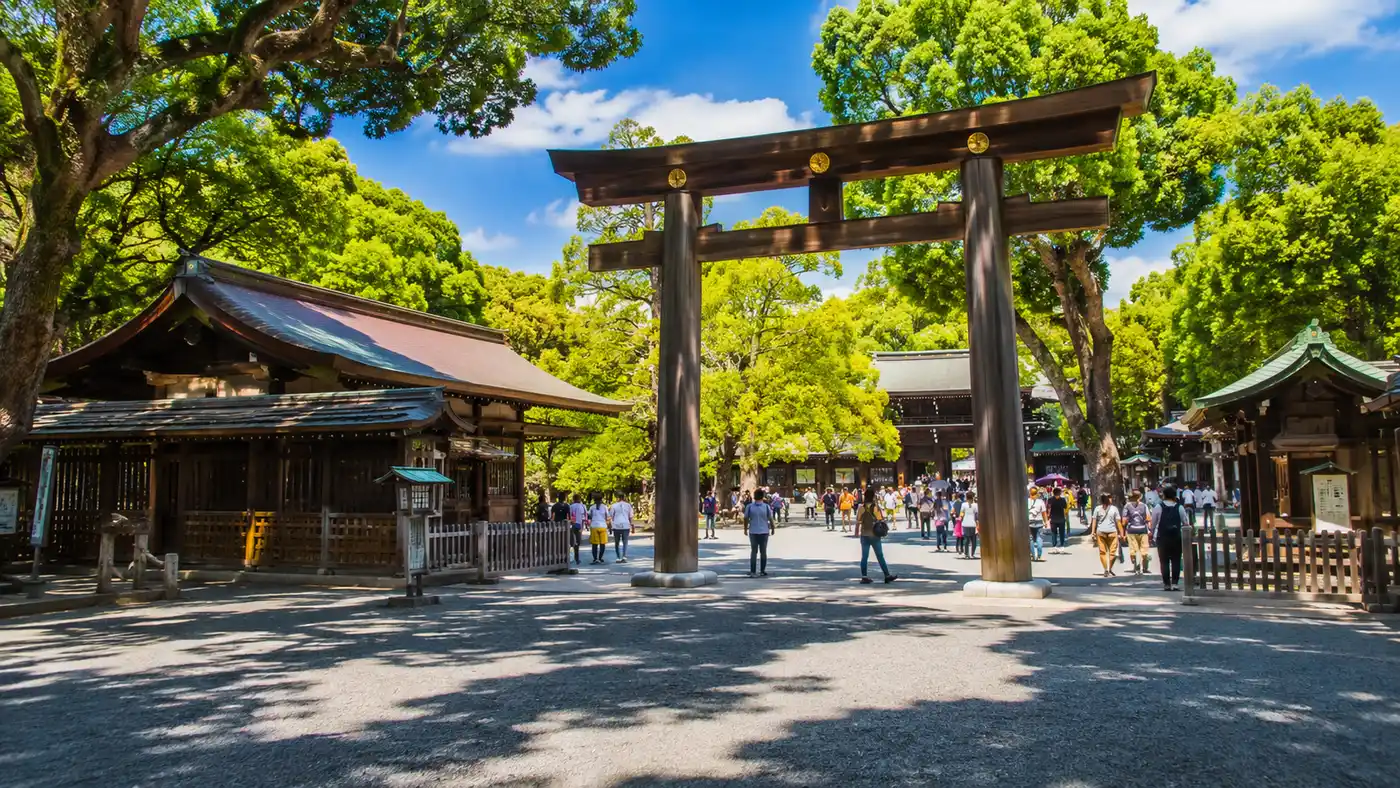
Meiji Shrine Inner Garden & Iconic Sights
Discover the serene beauty of Meiji Shrine Inner Garden, iconic torii gates, and sacred forest. Plan your visit to this …
Continue Reading →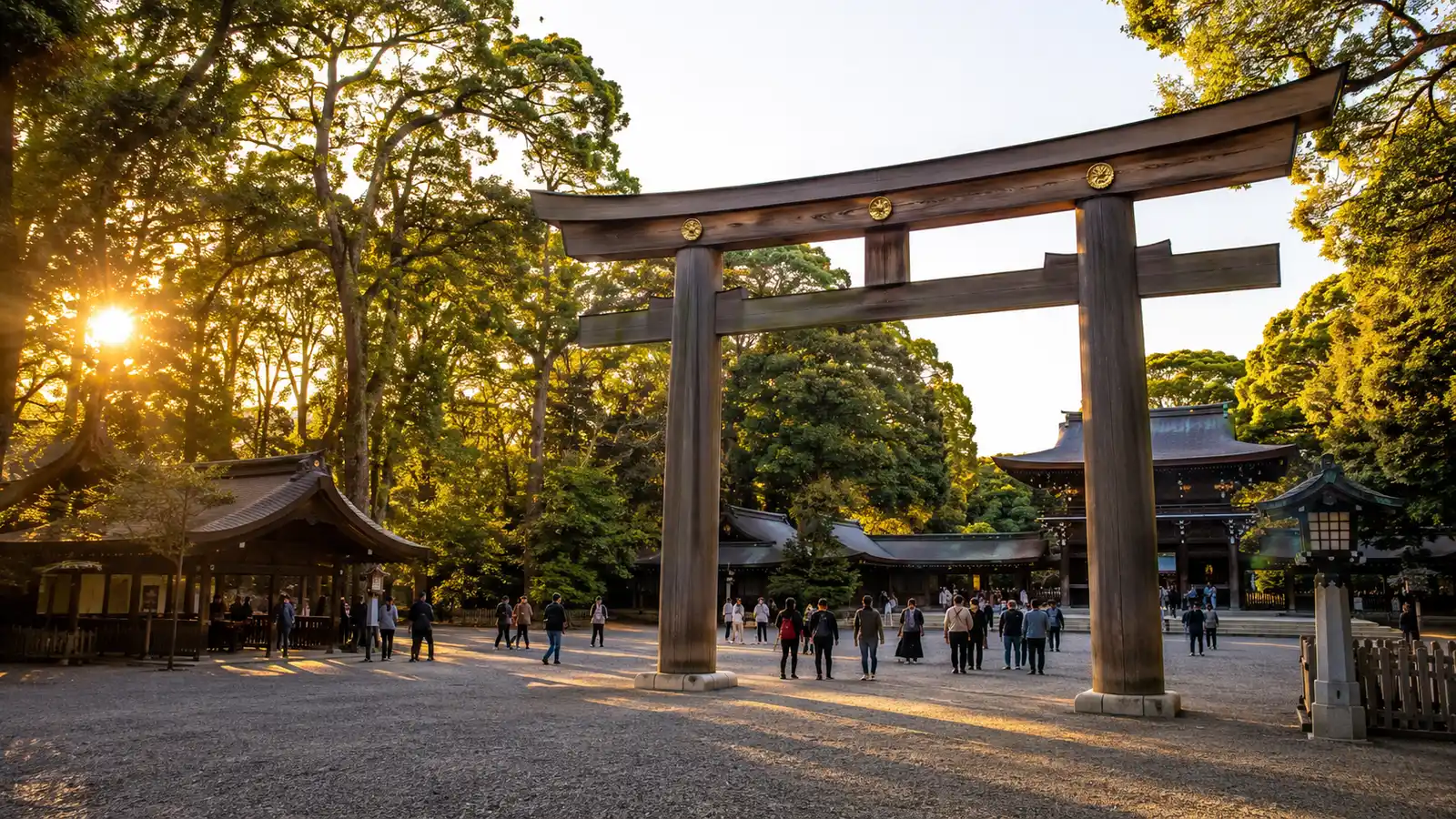
Step into a serene, ancient forest heart in the middle of bustling Shibuya. Discover the profound history and spiritual tranquility of Tokyo's most revered Shinto shrine.
Discover what makes Meiji Shrine unforgettable.
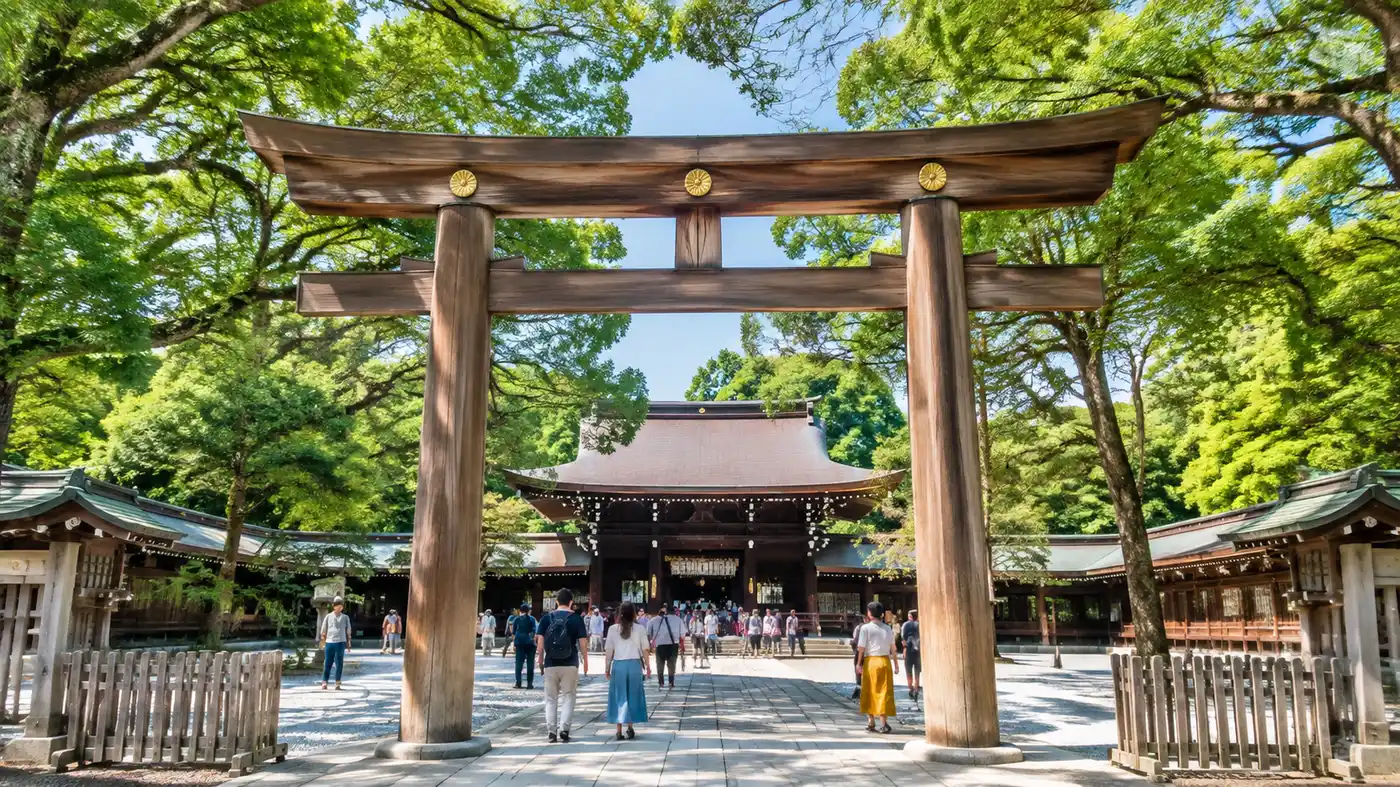
Our detailed guides help you understand the layout of Meiji Jingu, from the grand torii gates to the inner garden. We cover everything you need for a smooth, respectful visit. Learn about entry points and essential etiquette before you arrive.
Learn more →
Walk along gravel paths through 73 hectares of diverse trees, a living memorial to Emperor Meiji. Experience the profound sense of peace that permeates this unique urban forest. Find quiet corners for reflection away from the city's pulse.
Learn more →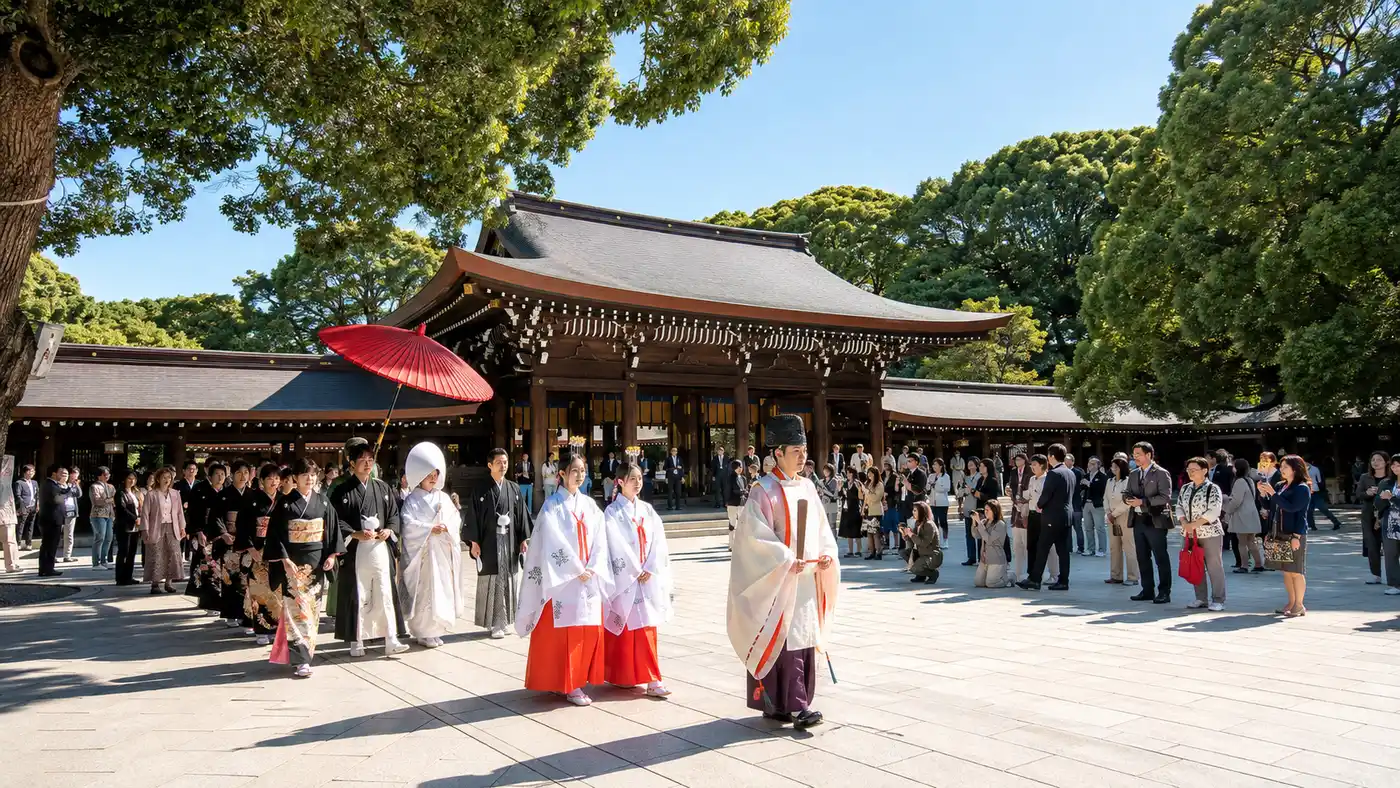
Meiji Jingu frequently hosts traditional Shinto ceremonies, including stunning wedding processions. Observe the solemn rituals and vibrant cultural displays that bring Japan's heritage to life. Check our calendar for upcoming events and seasonal festivals.
Learn more →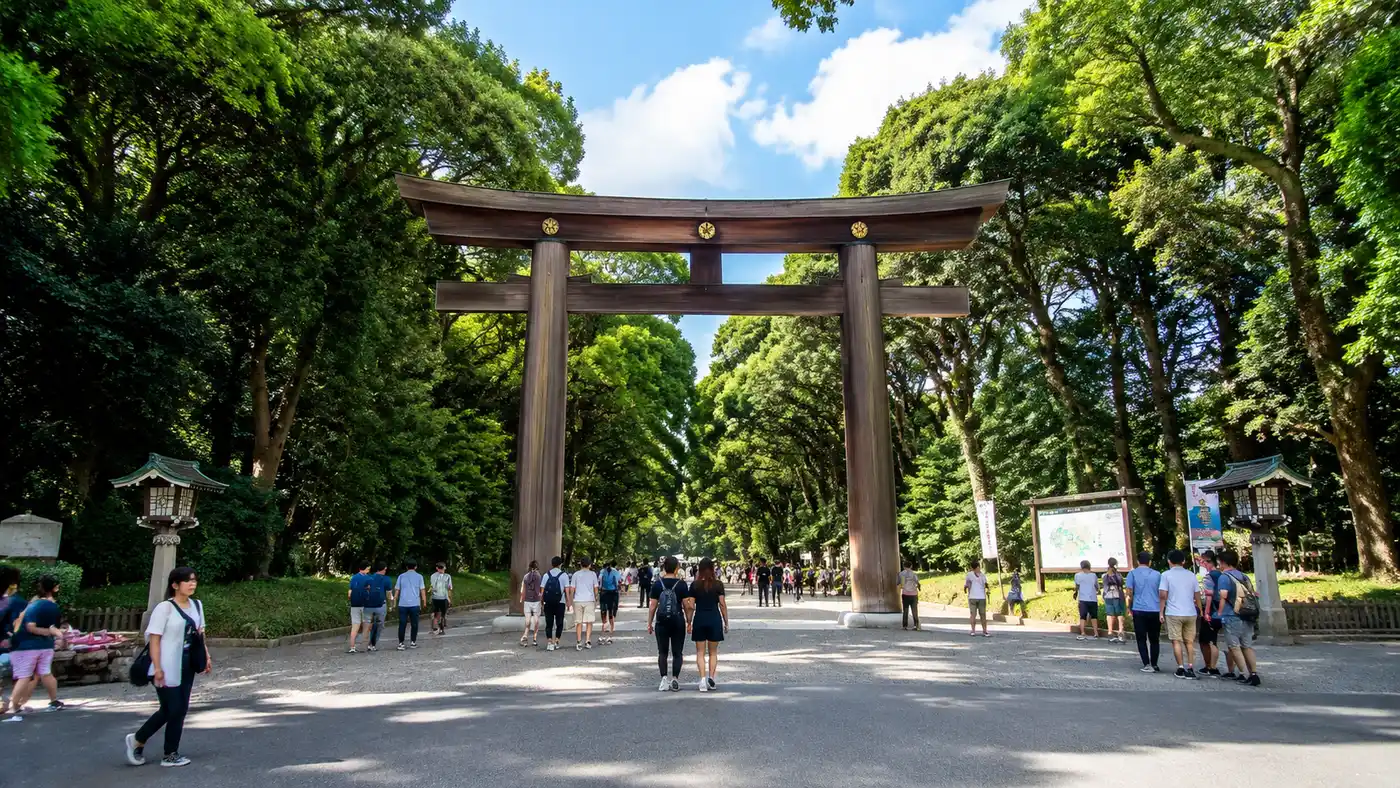
Located steps from Harajuku and Shibuya, Meiji Jingu offers a perfect contrast to Tokyo's vibrant youth culture and shopping districts. Craft an itinerary that blends spiritual tranquility with modern city adventures. Explore Takeshita Street or Omotesando after your visit.
Learn more →What to expect from arrival to departure.
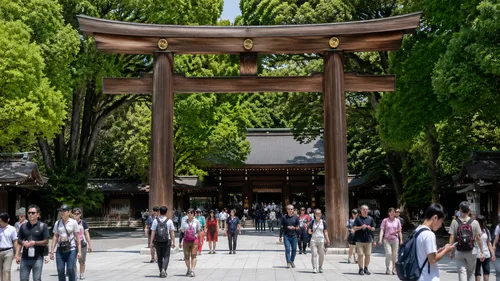
Step off the train at Harajuku Station, just a quick 3-minute walk to the first grand torii gate.
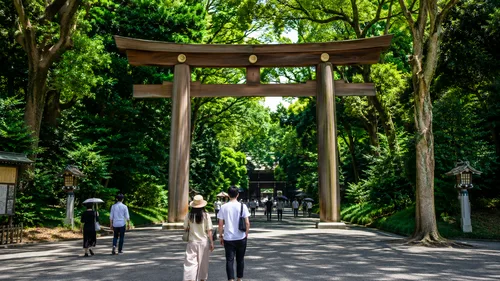
Pass through the massive wooden torii, marking your transition from urban bustle to sacred tranquility.
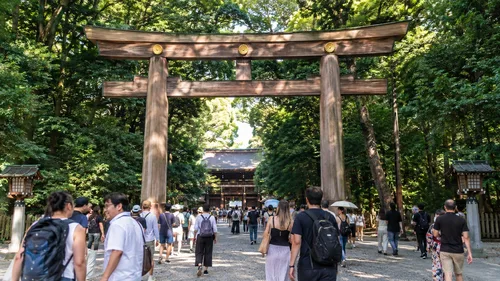
Follow the wide, gravel path, surrounded by a dense forest canopy, feeling the city fade away.
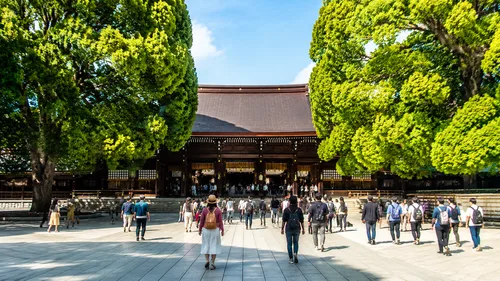
Arrive at the central complex, where you can offer prayers, view the main hall, and observe ceremonies.
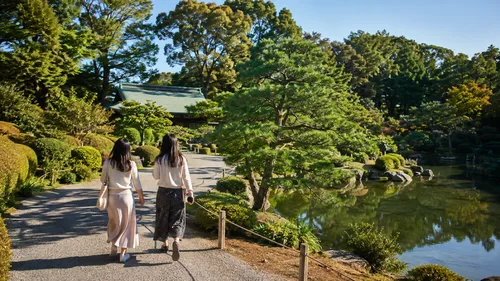
Consider a peaceful detour into the Inner Garden, especially beautiful with irises in June, for a small fee.
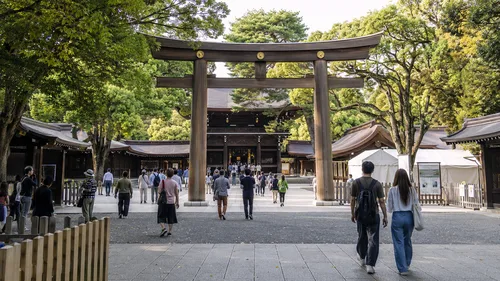
Exit the shrine grounds, carrying a sense of calm back into the vibrant energy of Tokyo, perhaps towards Omotesando.
Nestled between the vibrant districts of Harajuku and Shinjuku, Meiji Jingu Shrine offers an extraordinary escape into nature and history. This expansive Shinto shrine is dedicated to Emperor Meiji and Empress Shoken, revered figures who played a pivotal role in Japan's modernization during the Meiji Restoration.
Unlike many urban green spaces, Meiji Jingu is a meticulously crafted forest, planted with over 100,000 trees donated from across Japan and the world. Walking its wide gravel paths, you'll quickly forget the city's hum, enveloped instead by the rustling leaves and the distinct, peaceful atmosphere of a sacred site. It's a testament to thoughtful urban planning and deep cultural respect.
Join us as we guide you through this iconic Tokyo landmark, revealing its spiritual significance, practical tips for your visit, and how to best experience its unique blend of nature and tradition.
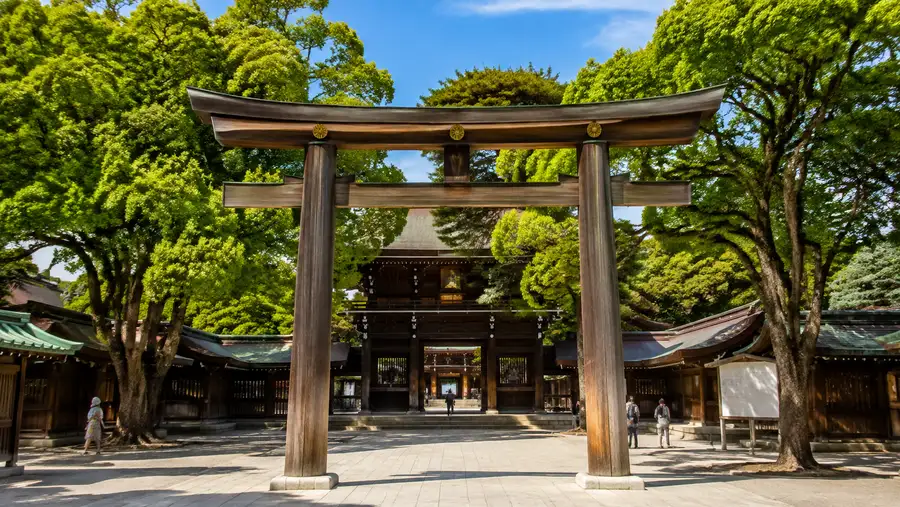
Walking through that forest felt like stepping into another world, so peaceful. The giant torii gates really make an impression, and it's amazing how close it is to Harajuku.
I visit Meiji Jingu often for quiet reflection. The Inner Garden, especially in early summer with the irises, is a true hidden gem and worth the small entrance fee.
A beautiful, serene spot, quite a contrast to the city. It was a bit crowded on the Sunday afternoon we went, but still very worth the walk for the atmosphere.
The sheer scale of the trees and the main shrine buildings is breathtaking. We even saw a traditional wedding procession, which was an unexpected cultural highlight of our trip.
Compare options and book directly below.
Explore the vast forest and main shrine buildings without any charge, including the outer torii gates and worship halls.
Access to the tranquil Inner Garden, famous for its iris garden (seasonal) and Kiyomasa's Well, offering a deeper sense of peace.
View historical artifacts and possessions of Emperor Meiji and Empress Shoken, providing insight into their lives and era.
Everything you need to know before visiting Meiji Shrine.
Hours: The main shrine grounds are open daily from sunrise to sunset, with exact hours varying seasonally. For example, in January, hours are typically 6:40 AM to 4:20 PM, and in June, around 5:00 AM to 6:30 PM. The Meiji Jingu Museum is open from 10:00 AM to 4:30 PM (last entry 4:00 PM) and is closed on Thursdays (except national holidays) and between exhibitions. The Inner Garden (Meiji Jingu Gyoen) is open from 9:00 AM to 4:30 PM (November-February until 4:00 PM), with extended hours in June (Mon-Fri 8:00 AM-5:00 PM, Sat-Sun 8:00 AM-6:00 PM).
| Main Grounds Access (N/A) | Free |
| Inner Garden (Gyoen) (At entrance) | ¥500 |
| Treasure Museum (At entrance) | ¥1000 |
📍 1-1 Yoyogi Kamizonocho, Shibuya-ku, Tokyo 151-8557, Japan
See it before you go.
Worth combining with your Meiji Shrine visit.
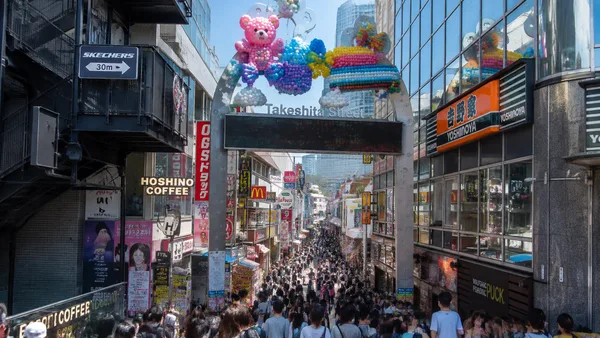
Tokyo's vibrant youth culture hub, known for Takeshita Street's quirky fashion and trendy cafes.
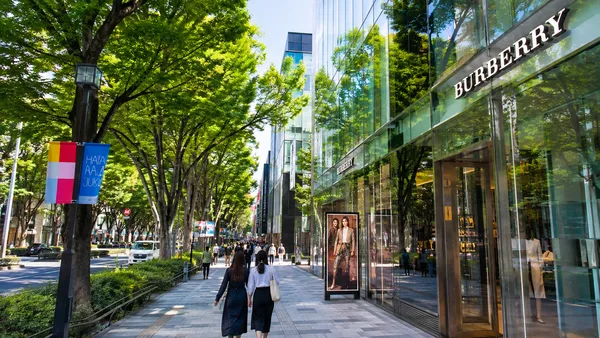
An upscale avenue famed for high-end fashion boutiques, elegant cafes, and striking architecture.
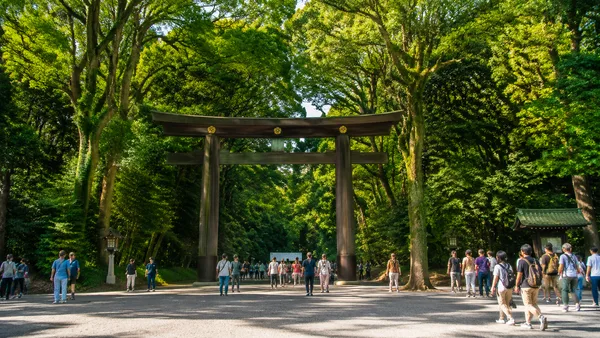
A large public park perfect for picnics, people-watching, and often hosts weekend events and markets.
Meiji Shrine welcomes all visitors with accessibility features and family-friendly amenities.
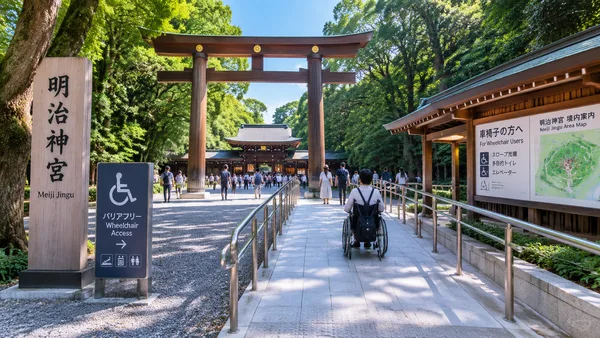
Meiji Shrine is generally wheelchair accessible, with smooth paths and ramps leading to the shrine itself. The pilgrim paths through the forest consist of compacted gravel on a sealed base with gentle slopes. While some sources suggest gravel paths can be challenging for manual wheelchairs, others state that the compacted gravel handles a standard wheelchair without difficulty. Wheelchairs are available for loan at the entrance of the shrine grounds. Accessible toilets are available at the main precinct.
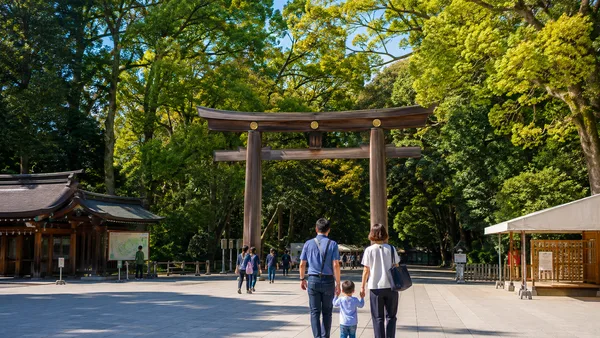
Meiji Jingu Shrine is considered family-friendly and worth visiting with children. The wide gravel paths are mostly stroller-friendly, though they can be bumpy, so a baby carrier might be easier for small infants. There are open grounds for children to run around, and the shaded, quiet forest offers a low sensory load. Eating and drinking are generally not allowed within the shrine grounds, but there is a designated restaurant called the Forest Terrace with toilets for visitors. Toilets are also available in several locations along the path to the shrine.
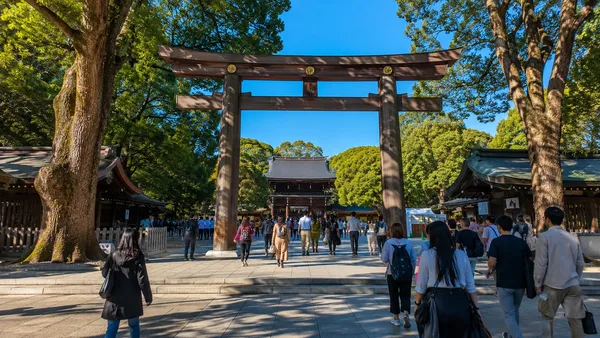
Signage is primarily in Japanese and English. Basic information can be found in several other languages online.
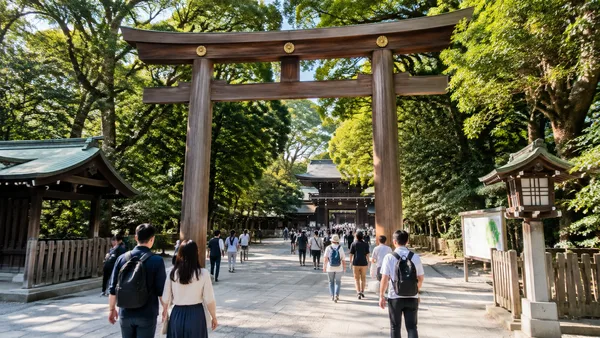
The shrine features smooth paths and several ramps, making it easy to navigate. Both the south entrance (from Harajuku Station) and the west approach (from Yoyogi-Hachiman) are step-free with gentle slopes and no stairs leading to the main worship hall.
Dive deeper into Meiji Shrine.
Discover the serene beauty of Meiji Shrine Inner Garden, iconic torii gates, and sacred forest. Plan your visit to this …
Continue Reading →
Discover how to get to Meiji Shrine, its opening hours, admission costs, and essential etiquette tips for a respectful …
Continue Reading →
Discover the best things to do near Meiji Shrine, from Harajuku's fashion to Omotesando's luxury and delicious …
Continue Reading →
메이지 신궁 내정원의 고요한 아름다움, iconic 토리이 문, 신성한 숲을 발견하세요. 도쿄의 이 성역을 방문 계획을 세워보세요.
Continue Reading →
메이지 신궁 주변에서 할 수 있는 최고의 활동들을 발견하세요. 하라주쿠의 패션부터 오모테산도의 럭셔리, 맛있는 레스토랑까지!
Continue Reading →

메이지 신사에 가는 방법, 개장 시간, 입장료 및 예절 팁을 알아보세요. 존경심과 평온함을 느낄 수 있는 방문 경험을 위한 필수 가이드입니다.
Continue Reading →Common questions about Meiji Shrine.
No, entry to the main shrine grounds and forest is completely free. Small fees apply if you wish to enter the Inner Garden or the Treasure Museum.
Most visitors spend 90 to 120 minutes exploring the main path, shrine complex, and perhaps a quick stop at the gift shop. Add another 30-45 minutes for the Inner Garden.
You can take photos on the grounds, but please refrain from photographing inside the main shrine buildings or during active ceremonies. Always be respectful of worshippers.
The most convenient access is via JR Harajuku Station or the Meiji-jingumae Station on the Tokyo Metro Chiyoda and Fukutoshin Lines. Both are just a short walk away.
There are no restaurants or cafes within the main shrine complex itself, but you'll find vending machines for drinks. Plenty of options are available just outside the gates in Harajuku.
While both are significant spiritual sites in Tokyo, Meiji Jingu is a Shinto shrine dedicated to imperial figures, known for its vast forest. Senso-ji is a Buddhist temple, famous for its bustling Nakamise-dori market and vibrant temple complex. They offer very different experiences.
There is no strict dress code, but as a place of worship, modest attire is recommended. Comfortable walking shoes are a must due to the long gravel paths.
Dive deeper into our guides, find insider tips, and craft your perfect visit to Meiji Jingu Shrine today.